
Introduction
A better lifestyle doesn’t always come from making major changes. Often, the quality of everyday life is shaped by small choices repeated consistently.
How you begin your morning, where you keep important items, how you manage notifications, when you plan your day, and whether you leave enough room for rest can all influence how your days feel.
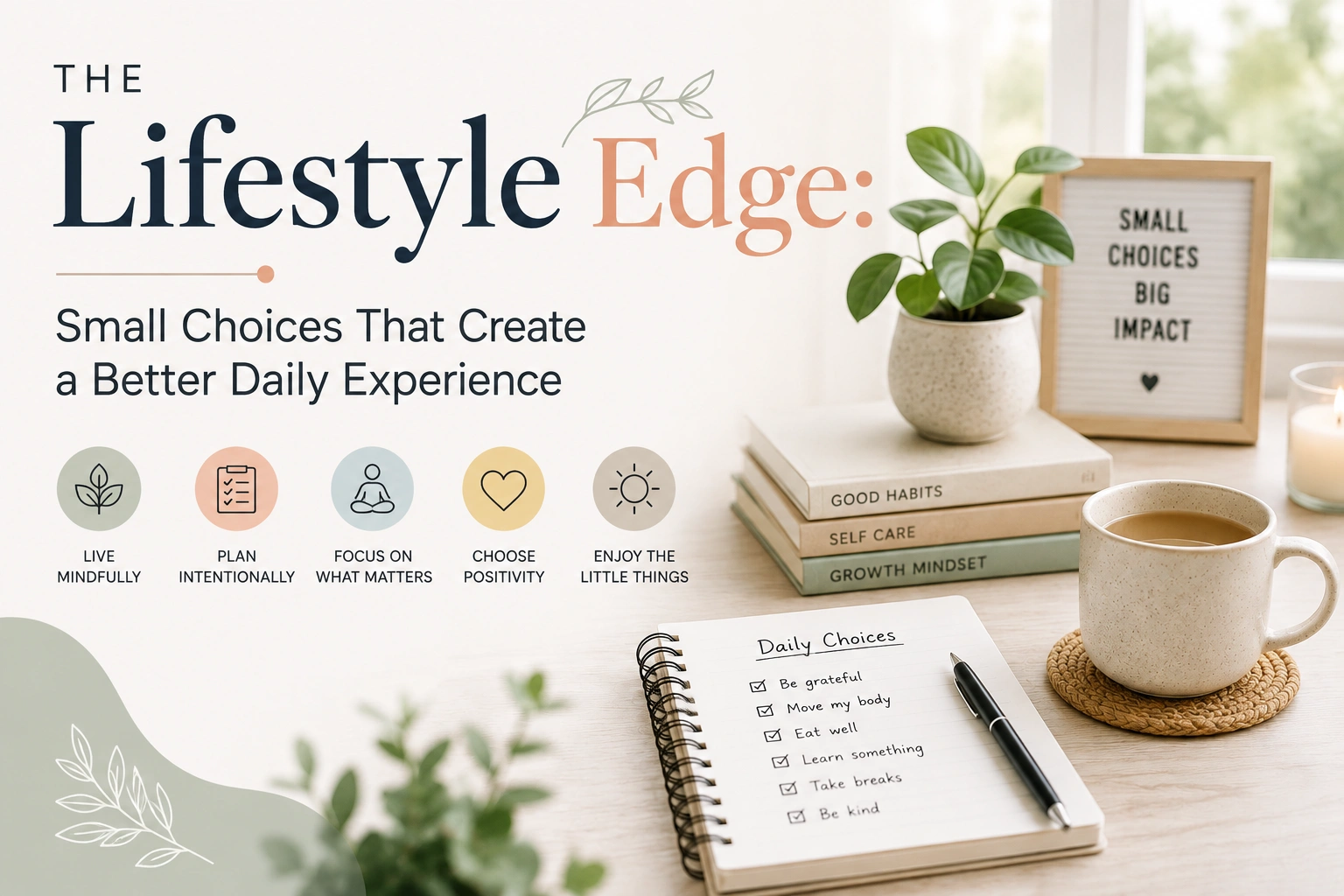
The Lifestyle Edge is a practical approach to these everyday choices. It focuses on creating simple systems and habits that reduce unnecessary friction while making room for the things that matter.
You don’t need to follow a strict routine or completely redesign your life. Instead, you can identify what isn’t working, make one practical adjustment, and gradually build a lifestyle that feels more organized and enjoyable.
What Is The Lifestyle Edge?
The Lifestyle Edge is a practical mindset focused on making everyday life more manageable, intentional, and enjoyable through small improvements.
It can apply to many areas of life, including:
- Daily routines
- Home organization
- Time management
- Digital habits
- Personal style
- Self-care
- Shopping decisions
- Work-life balance
- Hobbies and relationships
The principle is straightforward:
Make the things that matter easier, and reduce the things that create unnecessary friction.
1. Start With Your Real Life
One of the biggest mistakes people make when creating new routines is designing them around an imaginary perfect day.
Instead, look at your actual life.
Consider:
- Your work or study schedule
- Household responsibilities
- Family commitments
- Travel time
- Personal interests
- Energy levels
- Social activities
A useful lifestyle system should fit your circumstances.
2. Identify Your Biggest Sources of Friction
Small frustrations can accumulate.
You might regularly:
- Search for your keys.
- Forget small errands.
- Open too many apps.
- Reorganize the same drawer.
- Start the day without knowing your priorities.
- Spend too much time deciding what to wear.
- Put off enjoyable activities because they’re difficult to start.
Write down a few recurring problems.
Then choose one to solve.
3. Make One Improvement at a Time
Changing everything simultaneously can create unnecessary pressure.
Instead:
- Identify one problem.
- Find its cause.
- Create a simple solution.
- Test it.
- Keep it if it works.
Small improvements are easier to maintain.
The Lifestyle Edge at Home
Your surroundings can influence how easy your routines feel.
4. Give Frequently Used Items a Permanent Home
Choose predictable locations for things you use every day.
Examples include:
- Keys
- Wallet
- Bag
- Chargers
- Work equipment
- Important documents
The best location is usually one that is convenient enough to use consistently.
5. Organize According to Frequency
Not everything needs to be within easy reach.
Try this simple approach:
| Usage | Storage |
|---|---|
| Daily | Easy access |
| Weekly | Convenient storage |
| Occasional | Secondary storage |
| Rarely | Less accessible area |
This helps make everyday spaces more practical.
6. Fix the Cause of Repeated Clutter
If the same area becomes messy every day, cleaning it repeatedly may not solve the problem.
Ask:
“Why do things keep ending up here?”
Maybe:
- There is no convenient storage.
- The assigned location is too far away.
- Items are used frequently.
- The area naturally functions as a drop zone.
Change the system instead of constantly fighting the behavior.
7. Create a Five-Minute Evening Reset
Before ending the day:
- Put away obvious clutter.
- Clear your main surface.
- Return important items to their homes.
- Check tomorrow’s schedule.
- Prepare one thing you’ll need.
Five minutes of preparation can make the next morning feel more organized.
The Lifestyle Edge and Daily Planning
Good planning isn’t about filling every minute.
It’s about knowing what deserves your attention.
8. Choose One Main Priority
At the beginning of the day, ask:
“What would make today feel productive if I completed it?”
Choose one important task.
Then handle smaller responsibilities around it.
9. Use a Simple Task System
Keep your task system easy to maintain.
You might divide tasks into:
Today
Things that genuinely need attention.
This Week
Important but flexible responsibilities.
Later
Tasks that don’t require immediate action.
Avoid creating dozens of categories unless they actually help.
10. Turn Vague Tasks Into Actions
A vague task can create hesitation.
Instead of:
“Organize work.”
Try:
“Review the project folder and identify missing documents.”
Instead of:
“Get healthier.”
Try:
“Prepare tomorrow’s lunch.”
Specific actions are easier to begin.
11. Leave Space for the Unexpected
A schedule without breathing room can become stressful.
Leave space for:
- Delays
- Unexpected calls
- Additional responsibilities
- Breaks
- Conversations
- Changes in plans
Flexibility makes routines more sustainable.
12. Batch Similar Activities
When practical, group similar tasks together.
Examples include:
- Checking emails during selected periods
- Handling household errands together
- Planning meals once or twice a week
- Completing administrative tasks in one session
The objective is to reduce unnecessary switching.
The Lifestyle Edge and Digital Balance
Digital tools can make life easier, but constant notifications can also create unnecessary interruptions.
13. Review Your Notifications
Look at every application that sends alerts.
Ask:
“Does this really need to interrupt me?”
Keep important notifications.
Reduce unnecessary ones where appropriate.
14. Give Digital Information a Home
Choose predictable locations for different types of information.
| Information | Location |
|---|---|
| Appointments | Calendar |
| Tasks | Task manager |
| Documents | File storage |
| Reference material | Notes |
| Shopping needs | Shopping list |
The specific tools don’t matter as much as having a consistent system.
15. Clean Digital Clutter Gradually
Don’t try to organize every digital file in one day.
Choose one category:
- Downloads
- Screenshots
- Old documents
- Bookmarks
- Email subscriptions
- Unused apps
Clean one category and move on.
16. Create Periods of Digital Quiet
You don’t need to disconnect completely.
Instead, create short periods when you intentionally reduce interruptions.
For example:
- During focused work
- While reading
- During meals
- During conversations
- Before sleeping
This can help you decide when technology deserves your attention.
The Lifestyle Edge and Personal Style
Personal style doesn’t require constantly buying new things.
17. Understand What You Actually Wear
Look at your existing wardrobe.
Identify:
- Your favorite colors
- Frequently worn pieces
- Comfortable clothing
- Reliable combinations
- Items you rarely use
Your real habits can tell you more about your style than trends can.
18. Build Around Versatile Pieces
Choose clothing that works across several situations when appropriate.
A practical wardrobe might include:
- Comfortable everyday basics
- A few versatile tops
- Reliable bottoms
- Practical footwear
- A small selection of accessories
The right combination depends on your lifestyle.
19. Think Before Following Trends
Before purchasing a trend-driven item, ask:
“Would I still want this if it weren’t popular?”
If yes, it may be a good fit.
If no, waiting may prevent an unnecessary purchase.
The Lifestyle Edge and Self-Care
Self-care doesn’t have to be expensive or complicated.
20. Make Rest a Real Part of Your Routine
Rest isn’t wasted time.
Depending on your preferences, it could include:
- Reading
- Walking
- Listening to music
- Quiet time
- Spending time with friends
- Enjoying a hobby
Choose activities that genuinely help you recharge.
21. Create a Personal Reset Routine
When your day feels overwhelming, try a short reset:
- Step away from the current task.
- Tidy one small area.
- Drink some water.
- Take a few quiet minutes.
- Decide what needs attention next.
The purpose isn’t to solve every problem.
It’s to create a clearer starting point.
22. Protect Time for Enjoyable Activities
A balanced lifestyle needs more than responsibilities.
Make space for:
- Hobbies
- Sports
- Reading
- Travel
- Family
- Friends
- Creative projects
- Learning
Even small amounts of protected personal time can give your week more variety.
The Lifestyle Edge and Smarter Spending
Your purchases become part of your environment and routine.
23. Ask Whether You Actually Need Something
Before buying, consider:
- Do I already own something similar?
- How often will I use it?
- Where will I store it?
- Does it solve a real problem?
- Is it worth maintaining?
This can encourage more intentional purchasing.
24. Consider the Space an Item Takes
The cost of an item isn’t only financial.
It may also require:
- Storage
- Cleaning
- Maintenance
- Organization
- Time
Think about the complete impact before making larger purchases.
25. Keep a Running Needs List
Instead of trying to remember everything, maintain one simple list.
Add items when you genuinely need them.
Review it before shopping.
This makes everyday purchasing more deliberate.
The Lifestyle Edge and Personal Growth
Improvement becomes easier when it connects to your real priorities.
26. Choose One Skill to Develop
Consider a skill that would genuinely improve your life.
Examples include:
- Cooking
- Communication
- Writing
- Technology
- Organization
- Financial planning
- Creative skills
Choose one and practice consistently.
27. Track What Actually Helps
Pay attention to your own experience.
For example:
If preparing the night before makes mornings easier, keep doing it.
If a particular planning method creates more work than value, change it.
If a storage system makes things harder to find, redesign it.
Your experience is useful feedback.
28. Review Your Lifestyle Systems
Every few weeks, ask:
- What’s working?
- What’s frustrating?
- What takes unnecessary effort?
- What do I want more time for?
- What can I remove?
- What should I change?
Then make one adjustment.
A Simple Lifestyle Edge Weekly Review
| Area | Question |
|---|---|
| Home | What repeatedly becomes messy? |
| Time | What consumed unnecessary attention? |
| Digital | Which interruptions can be reduced? |
| Spending | Which purchases were genuinely useful? |
| Work | What process could be simpler? |
| Personal | What did I enjoy this week? |
| Relationships | Did I make enough time for people who matter? |
| Next Week | What one improvement should I test? |
Keep the review short.
The goal is to identify one useful improvement.
10 Lifestyle Edge Habits Worth Trying
- Choose tomorrow’s main priority tonight.
- Give everyday items permanent homes.
- Keep your task system simple.
- Separate fixed appointments from flexible tasks.
- Reduce unnecessary notifications.
- Clean one digital category at a time.
- Think about storage before buying new things.
- Make hobbies easy to start.
- Protect time for rest and relationships.
- Review your routines regularly.
Common Lifestyle Mistakes
Trying to change everything at once
Too many changes can make a new routine difficult to maintain.
Creating complicated systems
If a system requires constant maintenance, it may be adding complexity rather than removing it.
Comparing your lifestyle with others
Someone else’s routine may not fit your schedule or priorities.
Treating organization as perfection
A useful system can be imperfect and still work well.
Filling every free moment
Rest and unstructured time are valuable.
Ignoring what you enjoy
A sustainable lifestyle should include activities that make life meaningful.
A 20-Minute Lifestyle Edge Reset
You can start today with one small problem.
Minutes 1–5: Identify
Choose one recurring frustration.
Minutes 6–9: Understand
Ask why it keeps happening.
Minutes 10–13: Remove
Eliminate one unnecessary step.
Minutes 14–17: Simplify
Create a practical alternative.
Minutes 18–20: Test
Use the new approach immediately.
If it works, keep it.
If it doesn’t, adjust it.
Frequently Asked Questions
What is The Lifestyle Edge?
The Lifestyle Edge is a practical approach to improving everyday life through simple routines, organization, intentional decisions, and better use of time.
How can I create a better daily routine?
Start with your existing schedule rather than trying to copy someone else’s routine. Identify recurring problems and create small systems that make those areas easier to manage.
Does The Lifestyle Edge require a minimalist lifestyle?
No. It isn’t about owning as little as possible. It’s about reducing unnecessary complexity while keeping what genuinely adds value to your life.
How can I make my day less stressful?
Focus on realistic planning, clear priorities, and enough flexibility for unexpected events. Avoid filling every available minute with tasks.
How can I make more time for hobbies?
Make hobbies easier to begin and protect realistic blocks of personal time. Keeping necessary materials accessible can reduce the preparation required.
What is the easiest Lifestyle Edge habit to start?
Choose one frequently repeated frustration and simplify it. Giving commonly misplaced items permanent homes is an easy example.
Conclusion
The Lifestyle Edge is not about creating a perfect life. It’s about creating a life that works better for you.
Start small.
Notice what repeatedly creates friction.
Simplify the process.
Organize your surroundings around your real habits.
Protect your attention.
Spend thoughtfully.
Make room for rest, relationships, and activities you genuinely enjoy.
Over time, these small choices can create a noticeable difference in how your days feel.
A better lifestyle doesn’t have to be complicated. Sometimes, the biggest improvement is simply making everyday life a little easier, one practical choice at a time.