

Introduction
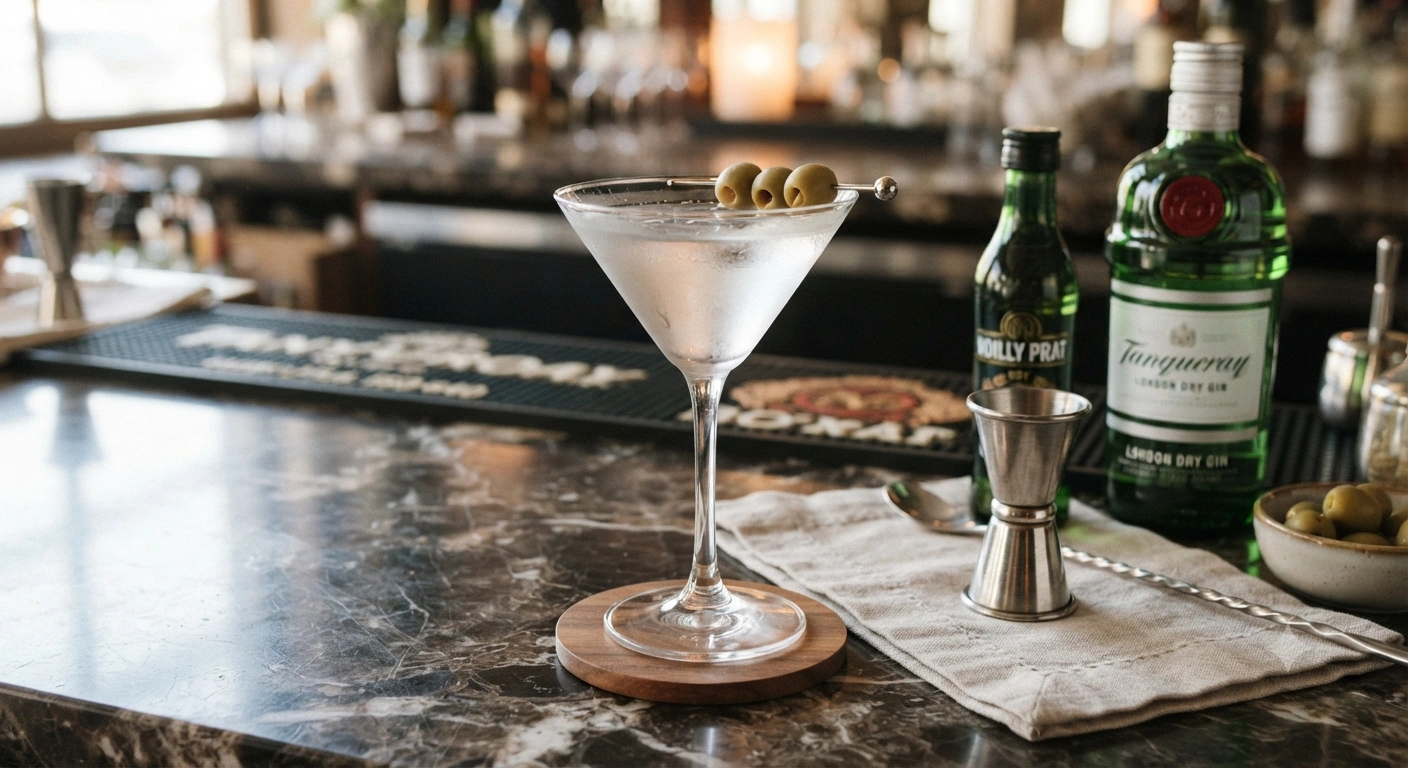
A Martini looks simple: gin, dry vermouth, ice and a garnish. Yet small changes in the ratio, temperature, dilution and garnish can produce noticeably different drinks.
That is what makes the Martini recipe interesting. It is not simply a cocktail that you pour together and serve. The amount of vermouth, the type of gin, the mixing method and even how cold the glass is can change the final result.
For a reliable starting point, the International Bartenders Association (IBA) lists its Dry Martini with 60 ml of gin and 10 ml of dry vermouth. The ingredients are stirred with ice and strained into a chilled Martini cocktail glass. The IBA specifies either expressed lemon-peel oil or a green olive as the garnish.
That recipe gives you a relatively dry, spirit-forward Martini. However, it is not the only legitimate way to make one. Historical and modern recipes use different gin-to-vermouth ratios, which means you can adjust the drink according to your preferred style.
This guide explains how to make a classic Martini at home, how much vermouth to use, whether you should stir or shake it, which garnish works best, and how to avoid the most common mistakes.
Classic Martini at a Glance
| Detail | Classic Dry Martini |
|---|---|
| Base spirit | Gin |
| Vermouth | Dry vermouth |
| IBA ratio | 60 ml gin + 10 ml dry vermouth |
| Method | Stir with ice |
| Glass | Chilled Martini/cocktail glass |
| Garnish | Lemon peel or green olive |
| Flavor | Dry, crisp, botanical and spirit-forward |
| Difficulty | Easy |
| Best served | Very cold |
The IBA’s current Dry Martini specification uses 60 ml gin and 10 ml dry vermouth, followed by stirring and straining.
What Is a Martini?
A classic Martini is a cocktail built primarily from gin and vermouth, usually served cold and without ice in the glass.
The simplest modern definition is straightforward: gin and vermouth are combined, chilled through mixing with ice, then strained into a cocktail glass. A lemon twist or olive is commonly used as the garnish. Difford’s Guide notes that the Martini has developed into a large family of variations, with different ratios and ingredients appearing throughout its history.
The drink has also evolved significantly over time.
Historical Martini-related recipes used different types and quantities of vermouth, bitters and gin. Earlier versions could be considerably sweeter or more balanced than the very dry versions commonly associated with the cocktail today.
So when someone asks for “the original Martini,” there is an important complication: Martini recipes have changed over generations.
For a practical home recipe, the IBA Dry Martini provides a clear modern reference point.
Classic Martini Ingredients
You only need a few ingredients.
1. Gin — 60 ml
Gin forms the foundation of the cocktail.
A London Dry-style gin is a common choice because its juniper and botanical character remains noticeable even when mixed with a relatively small quantity of vermouth.
The exact gin you choose can significantly influence the final flavor.
A floral gin may create a softer and more aromatic Martini, while a strongly juniper-forward gin can produce a sharper botanical profile.
2. Dry Vermouth — 10 ml
Dry vermouth provides the wine-based component of the cocktail.
The IBA recipe uses 10 ml of dry vermouth with 60 ml of gin.
Do not think of vermouth as an optional ingredient simply because some modern drinkers prefer very dry Martinis. It contributes aroma, acidity and balance.
3. Ice
Ice is essential.
It does two jobs:
- It chills the cocktail.
- It adds a controlled amount of dilution.
Good Martini technique is therefore not just about the ingredients. The way you mix them with ice matters too.
4. Garnish
The IBA allows either:
- Lemon peel
- Green olive
Both create different aromatic experiences.
A lemon twist adds bright citrus oils, while an olive introduces a savory element.
Classic Dry Martini Recipe
Ingredients
- 60 ml gin
- 10 ml dry vermouth
- Ice
- Lemon peel or green olive for garnish
Equipment
- Mixing glass
- Bar spoon
- Strainer
- Chilled Martini or cocktail glass
Method
- Chill your serving glass.
- Add plenty of ice to a mixing glass.
- Pour in 60 ml of gin.
- Add 10 ml of dry vermouth.
- Stir thoroughly with the ice.
- Strain into the chilled glass.
- Express a lemon peel over the surface or add a green olive.
- Serve immediately.
This follows the current IBA Dry Martini specification.
Step-by-Step: How to Make a Martini at Home
Step 1: Chill the Glass
Start by getting the serving glass cold.
You can place it in the freezer for a short period or fill it with ice and cold water while preparing the cocktail.
Discard the temporary ice and water before straining the Martini.
Why does this matter?
A Martini is normally served without ice in the glass. A warm glass can therefore cause the finished drink to lose its chill more quickly.
Step 2: Add Ice to the Mixing Glass
Fill a mixing glass with ice.
Large, solid ice cubes are useful because they provide efficient chilling while limiting unnecessary dilution compared with small, rapidly melting pieces of ice.
The quality and condition of your ice can make a noticeable difference.
Step 3: Add Gin and Vermouth
Measure your ingredients rather than pouring by eye.
For the IBA recipe:
60 ml gin + 10 ml dry vermouth
This gives you a 6:1 gin-to-vermouth ratio.
Measuring also makes it easier to adjust the recipe later.
Step 4: Stir
Stir the mixture with the ice.
The goal is to chill and dilute the drink while keeping the texture clean.
Stirring also avoids the vigorous aeration associated with shaking.
Step 5: Strain
Strain the chilled cocktail into your prepared glass.
A fine strainer can remove small ice fragments if you prefer an especially clean presentation.
Step 6: Add the Garnish
Express a strip of lemon peel over the drink by twisting it over the surface.
This releases citrus oils.
Alternatively, add a green olive.
The IBA specifically lists lemon oil from the peel or a green olive as the garnish for its Dry Martini.
Why Stirring Matters
Stirring is strongly associated with the classic Martini.
The IBA’s Dry Martini method specifically calls for the ingredients to be stirred with ice before straining.
Stirring produces a different style from shaking because the movement is gentler.
It allows you to:
- Chill the cocktail
- Add controlled dilution
- Combine the ingredients smoothly
- Maintain a clear appearance
However, the idea that a Martini can never be shaken is more complicated than popular cocktail culture sometimes suggests.
Historical recipes include both stirred and shaken Martini-related preparations. Difford’s Guide documents the Bradford as a shaken version of a Martini, showing that the stirred-versus-shaken debate has historical roots.
For a classic Dry Martini, however, stirring is the straightforward choice.
How Much Vermouth Should You Use?
This is where Martini recipes become more interesting.
The word “dry” generally refers to the use of dry vermouth and, in modern usage, often indicates a lower proportion of vermouth.
But there is no single universal ratio that every bartender uses.
The IBA currently specifies:
60 ml gin : 10 ml dry vermouth
Other established recipes use different proportions.
For example, Difford’s Guide documents a 2:1 version, which contains substantially more vermouth and is described as a “Wet Martini.”
A 4:1 recipe is also documented, while other recipes use 5:1 or 7:1 ratios.
That means there is plenty of room for personal preference.
A simple ratio guide
| Style | Approximate ratio | Character |
|---|---|---|
| Wet | 2:1 | More vermouth, softer and more wine-forward |
| Balanced | 3:1 to 4:1 | Noticeable vermouth |
| Dry | Around 5:1 to 6:1 | More gin-forward |
| Very dry | Higher than 6:1 | Strongly gin-forward |
These labels are practical descriptions rather than a universal legal classification.
What Does “Dry Martini” Mean?
The term can be confusing.
“Dry” does not mean that the cocktail contains no vermouth.
Instead, it traditionally relates to the type and/or quantity of vermouth used.
A Dry Martini generally uses dry vermouth, rather than sweet red vermouth.
Modern Martini culture also often associates “dry” with using less vermouth.
This is why someone ordering a “very dry Martini” may be asking for a much smaller vermouth proportion than the standard recipe.
The important thing is to clarify the intended ratio if you are making drinks for other people.
Gin vs Vodka for a Martini
The classic Martini is strongly associated with gin.
Gin contributes botanical flavors, especially juniper, and those flavors become an important part of the drink.
Vodka creates a different experience.
Because vodka generally has a more neutral flavor profile than gin, the vermouth and garnish can become more noticeable.
Neither approach needs to be treated as the only possible Martini style.
If you want the traditional botanical character, start with gin.
If you prefer a cleaner, more neutral spirit profile, a vodka Martini may suit your taste better.
The key point is that switching the base spirit changes the drink.
Lemon Twist vs Olive
Your garnish is more than decoration.
Lemon Twist
A lemon twist adds fresh citrus aroma.
To use one:
- Cut a strip of lemon peel.
- Hold it over the Martini.
- Twist it to release the oils.
- Rub the peel around the rim if desired.
- Add it to the drink or discard it.
The IBA specifically instructs drinkers to squeeze oil from the lemon peel onto the cocktail when using that garnish.
Green Olive
An olive gives the cocktail a savory character.
Choose a good-quality green olive and avoid one that is overly soft or strongly flavored unless that is specifically what you want.
If you enjoy savory flavors, an olive may be the better option.
Should You Shake or Stir a Martini?
For the classic Dry Martini recipe presented here:
Stir it.
That is the IBA method.
But shaking is not historically unheard of.
A shaken Martini-style cocktail has existed for a long time, and the Bradford is one documented example.
For home bartending, the easiest rule is:
Use stirring when you want the classic stirred Dry Martini experience.
Choose shaking only if you deliberately prefer the different texture and aeration.
The famous phrase “shaken, not stirred” is strongly associated with James Bond, but it should not be confused with the standard IBA Dry Martini preparation.
How to Make a Martini Colder
Temperature is one of the biggest factors in the drinking experience.
Try these techniques:
Chill the glass
A cold serving glass helps maintain the temperature.
Use plenty of ice
A mixing glass with sufficient ice makes chilling easier.
Keep the vermouth cold
Dry vermouth is a wine-based product and should be handled appropriately after opening. Follow the storage guidance on the bottle.
Stir long enough
Do not simply swirl the ingredients for a few seconds and immediately strain.
The cocktail needs enough contact with the ice to become properly chilled and diluted.
Serve immediately
A Martini is intended to be enjoyed cold. Once it is in the glass, do not leave it sitting around for an extended period.
Common Martini Mistakes
Using too much vermouth without intending to
If you want a very dry Martini, a large amount of vermouth will move the drink in the opposite direction.
Using too little vermouth
Going extremely low on vermouth can make the cocktail taste overwhelmingly like straight gin.
Balance matters.
Not chilling the glass
A warm glass can quickly reduce the cold sensation you worked to create.
Using poor ice
Small, rapidly melting ice can lead to excessive dilution.
Overcomplicating the drink
A classic Martini does not require a long list of ingredients.
Gin, dry vermouth, ice and a garnish are enough.
Forgetting to measure
A few milliliters can make a noticeable difference in a two-ingredient cocktail.
Popular Martini Variations
The Martini family contains many variations.
1. Wet Martini
A Wet Martini contains a larger proportion of vermouth.
A documented 2:1 version uses 2 parts gin to 1 part dry vermouth.
This creates a more vermouth-forward drink.
2. Fifty-Fifty Martini
The Fifty-Fifty style uses equal quantities of gin and dry vermouth.
Historical references documented by Difford’s Guide show this equal-parts style being stirred.
It is dramatically different from the very dry Martini many people associate with the word today.
3. Dirty Martini
A Dirty Martini adds olive brine.
That introduces a salty, savory quality and makes the drink substantially different from the classic Dry Martini.
4. Vodka Martini
Vodka replaces gin.
The result is generally less botanical and more neutral.
5. Gibson
A Gibson is a Martini-style cocktail traditionally associated with a cocktail onion garnish rather than a lemon twist or olive.
Martini vs Dirty Martini
These two drinks are often confused.
A classic Dry Martini contains:
- Gin
- Dry vermouth
- Ice
- Lemon peel or olive
A Dirty Martini adds olive brine.
The brine changes both the flavor and the aroma.
If you enjoy salty, savory cocktails, the Dirty Martini may be appealing. If you want to experience the gin and vermouth combination more directly, start with the classic version.
How to Adjust the Recipe to Your Taste
Once you have made the standard recipe, experiment with one variable at a time.
Want more vermouth?
Increase the dry vermouth.
For example, you might try a 4:1 or 3:1 ratio.
Want a drier Martini?
Reduce the vermouth.
A 5:1 ratio will taste more gin-forward than a 2:1 Martini.
Want more citrus?
Use a lemon twist and express the peel generously.
Want something savory?
Use an olive or explore a Dirty Martini.
Want more botanical character?
Choose a gin whose flavor profile you enjoy.
This approach is better than changing five things simultaneously because you can identify exactly what affected the result.
Frequently Asked Questions
What is the classic Martini recipe?
The IBA Dry Martini recipe uses 60 ml gin and 10 ml dry vermouth, stirred with ice and strained into a chilled cocktail glass. It is garnished with lemon peel or a green olive.
What is the best gin for a Martini?
There is no single gin that everyone must use. A London Dry-style gin is a practical starting point because its juniper and botanical profile works naturally in a classic Martini.
How much vermouth goes in a Martini?
The IBA recipe uses 10 ml of dry vermouth with 60 ml of gin. Other established recipes use different ratios, ranging from relatively vermouth-forward versions to very dry preparations.
Is a Martini better shaken or stirred?
For the classic Dry Martini recipe, stirring is the standard method used by the IBA. Historical Martini-related recipes also include shaken versions, so the question is ultimately about the style you want.
Why is a Martini called dry?
“Dry” generally refers to the use of dry vermouth and, in modern cocktail language, often indicates a lower vermouth proportion.
Should a Martini have an olive or lemon?
Either works. The IBA specifies expressed lemon-peel oil or a green olive. Lemon gives a brighter citrus aroma, while an olive adds a savory character.
Can I make a Martini with vodka?
Yes. A vodka Martini replaces gin with vodka, producing a less botanical drink.
What glass should you use for a Martini?
A chilled Martini or cocktail glass is a traditional choice. The important practical point is to serve the drink cold because it is normally served without ice in the glass.
What makes a Martini “wet”?
A Wet Martini contains more vermouth relative to the gin. For example, a documented 2:1 recipe uses two parts gin to one part dry vermouth.
Responsible Drinking
A Martini is a relatively spirit-forward cocktail, so it is worth keeping portion size and alcohol content in mind.
Drink responsibly, follow the legal drinking age and alcohol rules where you live, and never drive after drinking. People who are pregnant, taking medications that interact with alcohol, recovering from alcohol dependence, or advised to avoid alcohol should choose a non-alcoholic alternative.
Final Takeaway
A great Martini recipe does not require complicated equipment or a long ingredient list.
Start with the dependable IBA formula:
60 ml gin + 10 ml dry vermouth
Stir the ingredients with ice, strain into a chilled glass and finish with expressed lemon peel or a green olive.
From there, you can adjust the vermouth ratio according to your preference. A wetter Martini will showcase more vermouth, while a drier version will emphasize the gin.
The most useful lesson is that there is no need to chase an exaggerated “perfect Martini.” Start with a well-established recipe, control your temperature and dilution, measure your ingredients and change one variable at a time.
That is how you can discover the Martini style you actually enjoy.

One Comment